Symbiome + Barrel Digger + Sprite Editor

Prototype

Building systems where behaviour emerges from rules.

From artificial life and ecosystem simulation to consequence-driven mining gameplay, asset pipelines, and the tools required to make iteration real.

Discuss similar work
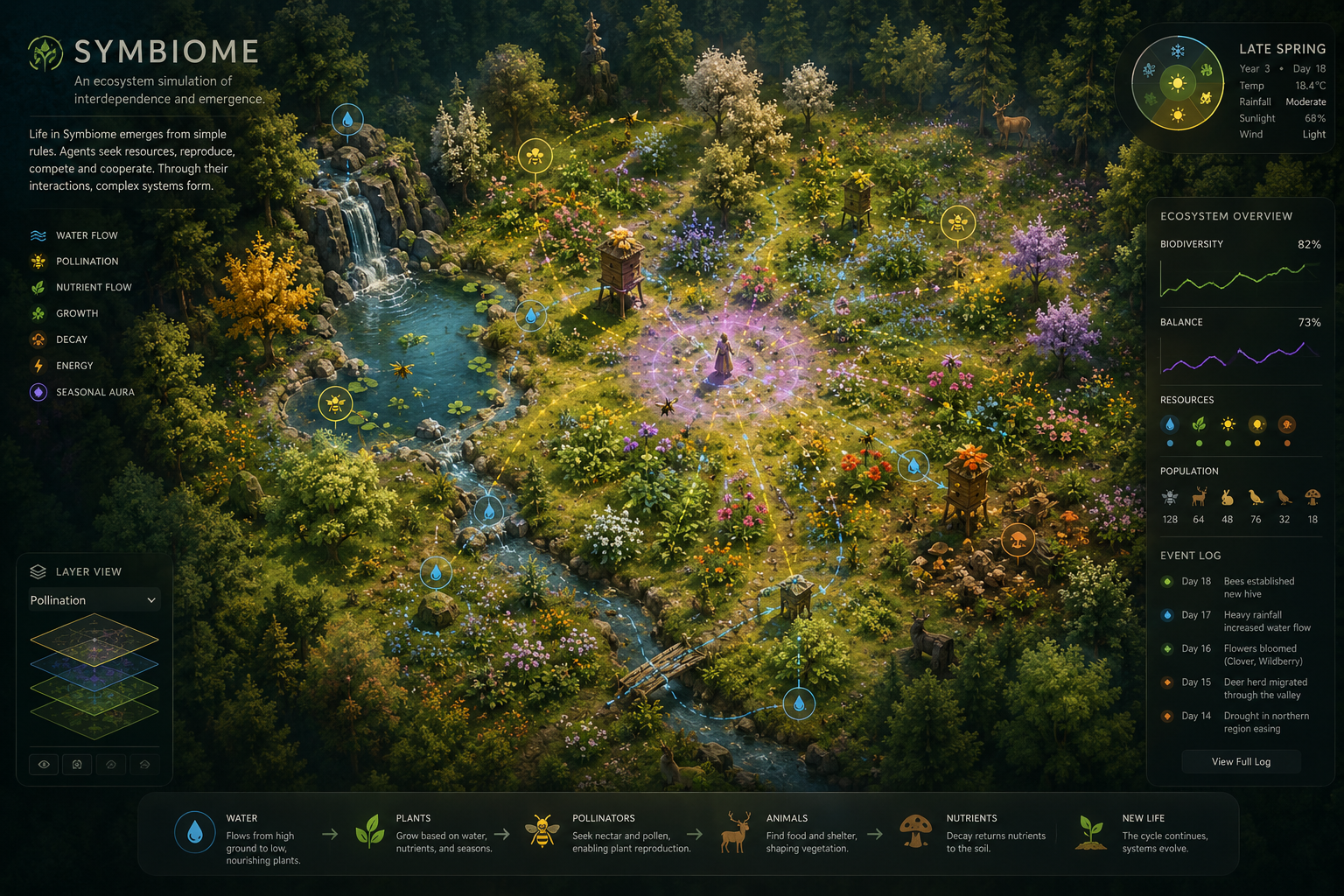
Symbiome meadow ecosystem interface showing resource flows, pollination, growth, agent populations, weather, and event log overlays.
Artificial life simulationSymbiome
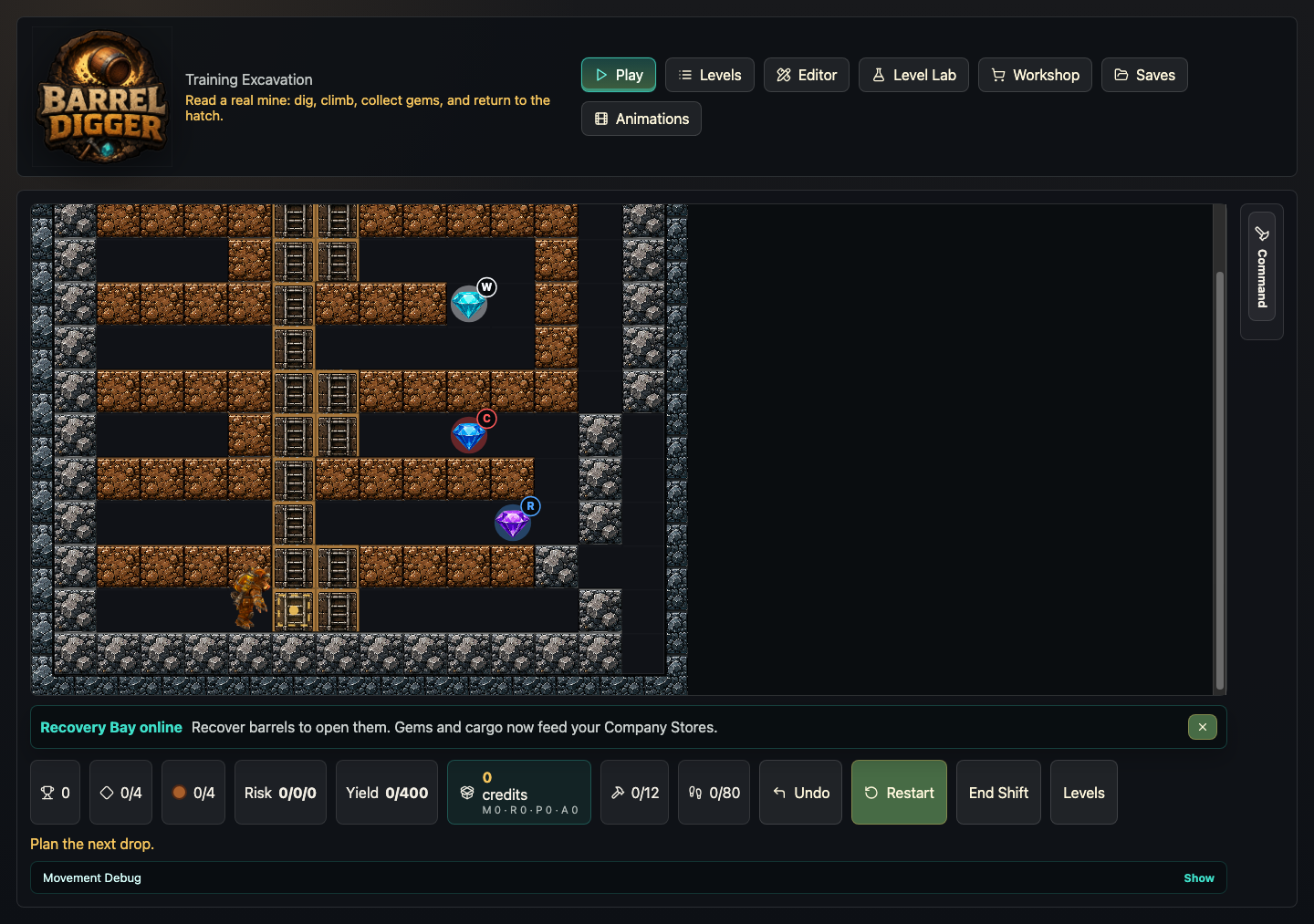
Barrel Digger gameplay interface showing a mine level, terrain tiles, gems, movement debug, level lab, editor, workshop, and recovery controls.
Deterministic collapse gameBarrel Digger
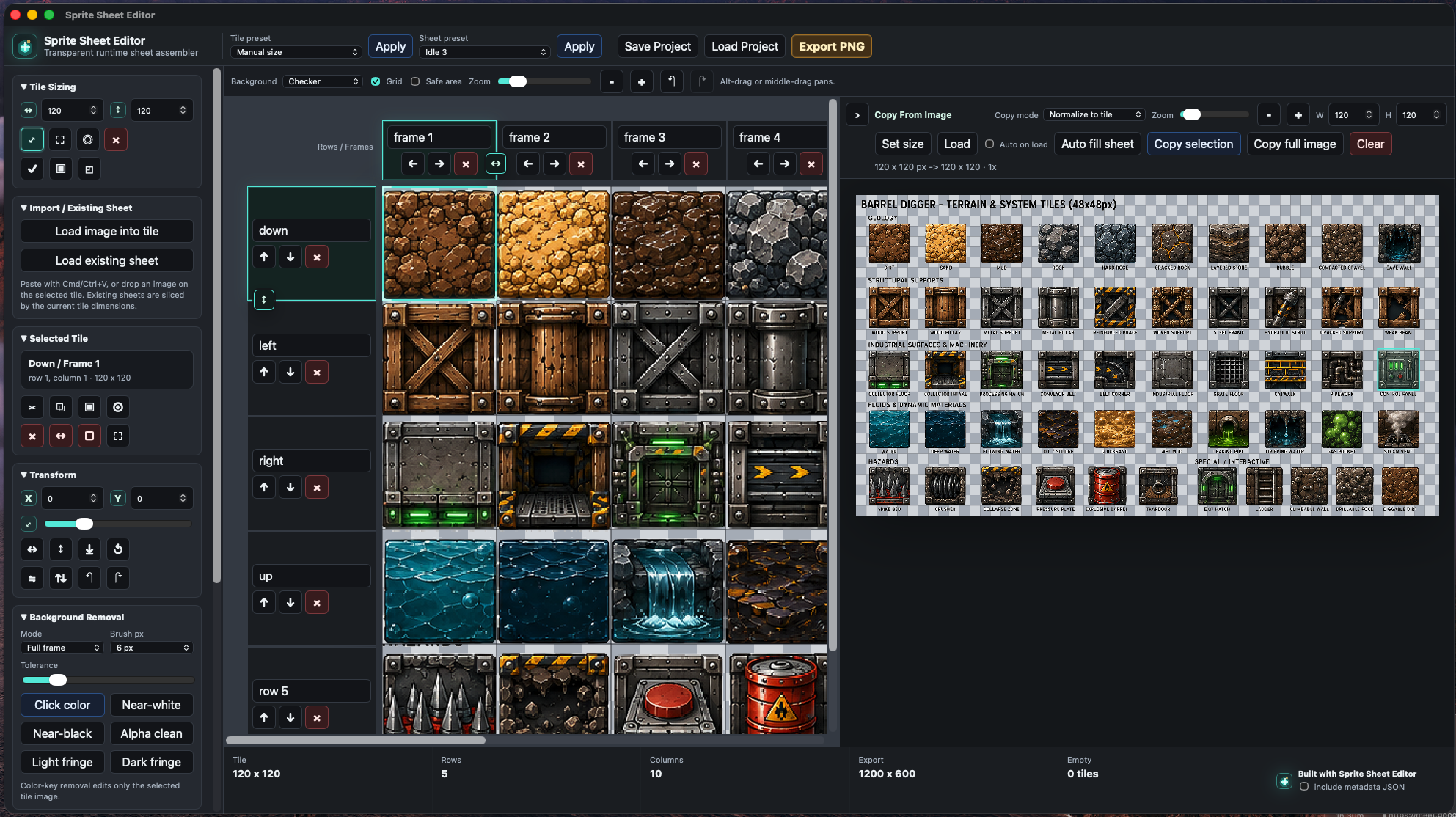
Sprite Editor interface showing tile sizing, imported terrain tiles, copy controls, and a Barrel Digger tile sheet preview.
Asset pipeline toolSprite Editor

What Was Built

Three concrete products, not one abstract capability.

A portfolio proof area covering Symbiome, Barrel Digger, and Sprite Editor: artificial life, ecosystem simulation, deterministic game systems, playable consequence, asset workflows, and the tooling needed to make iteration real.

Why It Matters

Rules have to become visible behaviour.

Interactive systems fail when behaviour is arbitrary or invisible. The rules, resources, physics, tools, and feedback loops have to be inspectable enough for a designer to reason about them and expressive enough for players to feel them.

Featured Projects

Show the machine. Then explain why it matters.

Symbiome meadow ecosystem interface showing resource flows, pollination, growth, agent populations, weather, and event log overlays.

Artificial life simulation

Symbiome

Vertical slice

An ecosystem simulation where water, plants, pollinators, animals, nutrients, seasonality, and agent behaviour combine into a living meadow.

What Was Built

The hard problem is not drawing a pretty meadow. It is making the world legible while the state changes under pressure: resources move, agents respond, populations shift, and the player needs to understand why.

Why It Is Interesting

The meadow is a systems surface. It shows resource flow, pollination, growth, decay, weather, event history, population pressure, and layered views of the same simulated world.

Evidence

  • Water, pollination, nutrient, growth, decay, energy, and seasonal-aura layers
  • Population and biodiversity readouts tied to visible ecosystem state
  • Autonomous agents seeking resources, reproducing, competing, and cooperating
  • Long-running event log that turns simulation change into inspectable evidence

Technical Judgement

  • Model resource flows as interacting systems rather than isolated animations
  • Keep agent behaviour explainable through overlays, metrics, and event history
  • Balance visual richness with readable simulation state
  • Treat emergence as a product requirement, not a decorative effect

What It Proves

  • Artificial-life and ecosystem simulation thinking
  • Complex state modelling and behavioural rules
  • Interfaces for explaining emergent outcomes
  • Product judgement around simulation legibility
Barrel Digger gameplay interface showing a mine level, terrain tiles, gems, movement debug, level lab, editor, workshop, and recovery controls.

Deterministic collapse game

Barrel Digger

Prototype

A physics and consequence-driven mining game where terrain, movement capability, gravity, barrels, materials, and progression create emergent gameplay.

What Was Built

Every move changes the mine. The system has to make risk readable: where the player can move, what can fall, which materials matter, and when cargo can be recovered safely.

Why It Is Interesting

It is a game about consequences rather than scripted puzzles. Terrain, ladders, gems, barrels, player capability, recovery goals, and level validation all push on one another.

Evidence

  • Playable mine canvas with terrain, ladders, gems, movement debug, recovery state, and command UI
  • Level Lab, editor, workshop, saves, animation, and recovery surfaces in the product shell
  • Fixed simulation tick and deterministic replay model
  • Material behaviour across dirt, sand, mud, rock, water, supports, collectors, and barrels

Technical Judgement

  • Keep simulation deterministic enough for replay, validation, and debugging
  • Make level design testable through validation, analysis, and test-play loops
  • Tie movement capability and progression to actual physical constraints
  • Package the game across web, macOS/Electron, and iPad/Capacitor targets

What It Proves

  • Game systems design
  • Simulation architecture and gameplay feel
  • Cross-platform product delivery
  • Tool-supported level iteration
Sprite Editor interface showing tile sizing, imported terrain tiles, copy controls, and a Barrel Digger tile sheet preview.

Asset pipeline tool

Sprite Editor

Prototype

A production tool for assembling, cleaning, previewing, validating, and exporting transparent sprite sheets used by the game pipeline.

What Was Built

The pipeline needed a small tool that could turn messy generated or imported art into predictable game-ready sheets without repeatedly hand-editing exports.

Why It Is Interesting

This is the unglamorous part that makes the games possible: loading art, slicing it, cleaning backgrounds, previewing rows, validating dimensions, saving projects, and exporting clean PNGs.

Evidence

  • Tile sizing, import, cleanup, slicing, copy, preview, and export controls
  • Transparent PNG export that excludes UI chrome, grid, labels, previews, and watermarks
  • Project save/load and metadata JSON export
  • Local Tauri desktop shell with native save-dialog integration

Technical Judgement

  • Optimise for rapid iteration rather than generic image-editor breadth
  • Make export correctness a product feature
  • Keep the workflow local, small, and purpose-built
  • Use tooling to protect the creative pipeline from repetitive manual cleanup

What It Proves

  • Developer tooling
  • Workflow optimisation
  • Practical product UX
  • Asset pipeline judgement

Pipeline

Tools and games are part of the same system.

The point is not only that games were built. The stronger proof is that concept work, generated assets, Blender/Meshy processing, custom tooling, and playable products were treated as one delivery pipeline.

  1. Concept

    Define the behaviour the world needs to express before choosing assets or UI.

  2. Meshy

    Generate or explore candidate creatures, objects, and visual directions.

  3. Blender

    Prepare models, poses, exports, animation frames, and usable production assets.

  4. Asset Processing

    Clean, normalise, slice, validate, and preserve metadata for repeatable use.

  5. Sprite Editor

    Assemble transparent sheets and preview rows before shipping art into the game.

  6. Playable Systems

    Feed the assets into Barrel Digger, Symbiome, and their simulation surfaces.

Technical Shape

A creative systems stack: concept and generated art, asset processing, custom sprite tooling, simulation code, gameplay surfaces, ecosystem visualisation, level tooling, and product shells for web, desktop, and iPad targets.

What This Proves

  • Artificial life and ecosystem simulation
  • Deterministic gameplay and consequence modelling
  • Asset pipeline and developer tooling
  • Interfaces that make behaviour inspectable

Evidence Now Visible

  • Symbiome meadow graphic shows layered ecosystem state, population metrics, resources, and event history
  • Barrel Digger gameplay capture shows the mine canvas, terrain, movement debug, level lab, editor, workshop, and recovery UI
  • Sprite Editor capture shows the asset cleanup and export workflow behind the games
  • Pipeline section shows how concept art, Meshy/Blender work, asset processing, local tooling, and game implementation connect

Technology

UnityReactTypeScriptTauriElectronCapacitorBlenderMeshy

Status / Next Step

Prototype / vertical slice: framed as public evidence of systems thinking, tooling, and simulation judgement, not as released-game performance or commercial outcome.

Add short gameplay clips, debug overlays, simulation traces, and architecture diagrams once the public capture set is ready.

Contact

Need software where behaviour has to be designed, not guessed?

Bring the hard part: simulation, tools, product feel, workflow, or a system where the rules need to become understandable action.

Discuss a project
Back to work